
Boathouse x Farm Club
On a warm, sunny summer afternoon, Gary, owner of Farm Club, and Logan, the restaurant manager, greeted Emmy and Dave as they walked into the bustling dining room. Gary wanted to discuss creating a collaboration wine for Farm Club to serve throughout the upcoming year. Historically, they have loved the Pinot Gris from Boathouse Vineyards and were excited to work with that fruit again.
While the Farm Club team are masters at growing food, hospitality, farming, and fermenting beer and cider, they entrusted the creative vision for the wine to Boathouse winemaker, Emmy Neighbors. The concept came together quickly: Boathouse would craft a textured, medium-bodied, fruit-driven wine with a beautiful golden hue that would pair with Farm Club’s farm-to-table menu.
A Little About the Fruit and Vineyard
Boathouse’s 22-acre vineyard sits in the heart of Leelanau. In 2025, Boathouse began the paperwork to become certified organic. The vineyard grows 11 different grape varieties, and all of the fruit is hand-harvested each year.
As expected, the 2025 growing season brought a few curveballs: long stretches of extremely high humidity, a cold and wet October mixed in with some dreamlike 75-degree, sunny days. After several weeks of sampling, the Pinot Gris was harvested on October 10th in excellent condition.
The fruit was immediately whole-cluster pressed and pressed hard to achieve the desired winemaking style. The wine fermented in stainless steel for about 11 days. The ferment was lovingly nicknamed “Gary,” and it moved along at a steady, gentle pace.
Aging & Elevage
After fermentation, the wine was racked into two different vessels. Sixty percent was aged in a concrete cube, while forty percent was aged in an Austrian acacia barrel.
Acacia wood is distinctive because it is far more subtle than oak. Rather than imparting overt structure or spice, it lends delicate floral and honeyed notes, along with a smooth, rounded texture. The concrete portion preserved the fresh, ripe fruit character of the wine while also contributing texture without adding flavor.
After about four months in their respective vessels, the two lots were blended back together in stainless steel. The wine was then cold stabilized using glycol, chilling it to approximately 29°F.
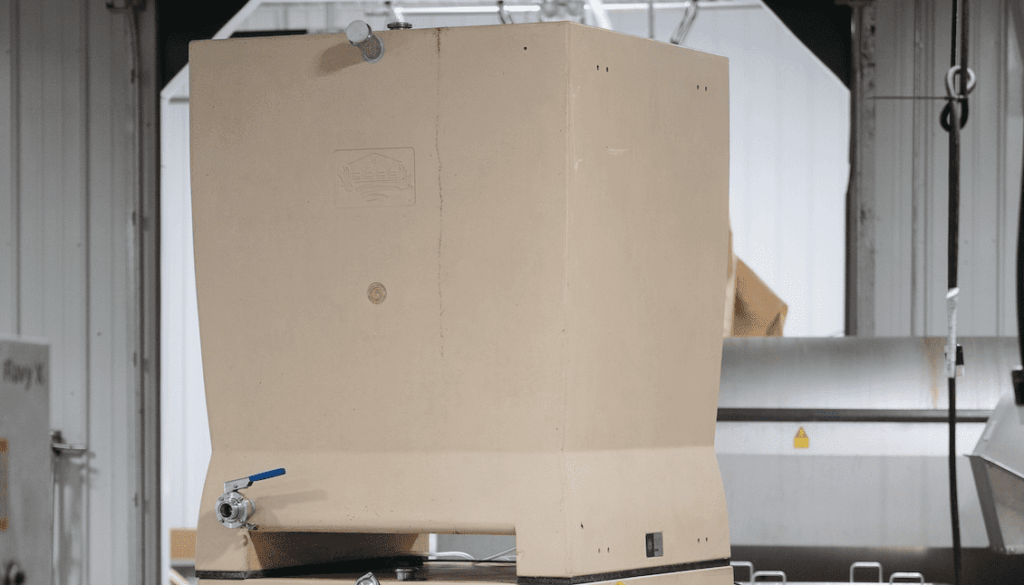
Our new 2024 Pinot Blanc is an excellent example of a white wine that has gone through malolactic fermentation (MLF). MLF is the conversion of the tart malic acid ( think “green apple”) into lactic acid (think smooth) By allowing this wine to go through MLF the wine is softer, more complex and more stable. The grapes are from a special one acre parcel on the eastern edge of our estate vineyard. Hand-harvested in mid-October, the fruit was carefully sorted and pressed directly into one of our concrete cubes for fermentation and aging. We love using concrete vessels for the texture and nuance they bring to the wine. For more on our Pinot Blanc.
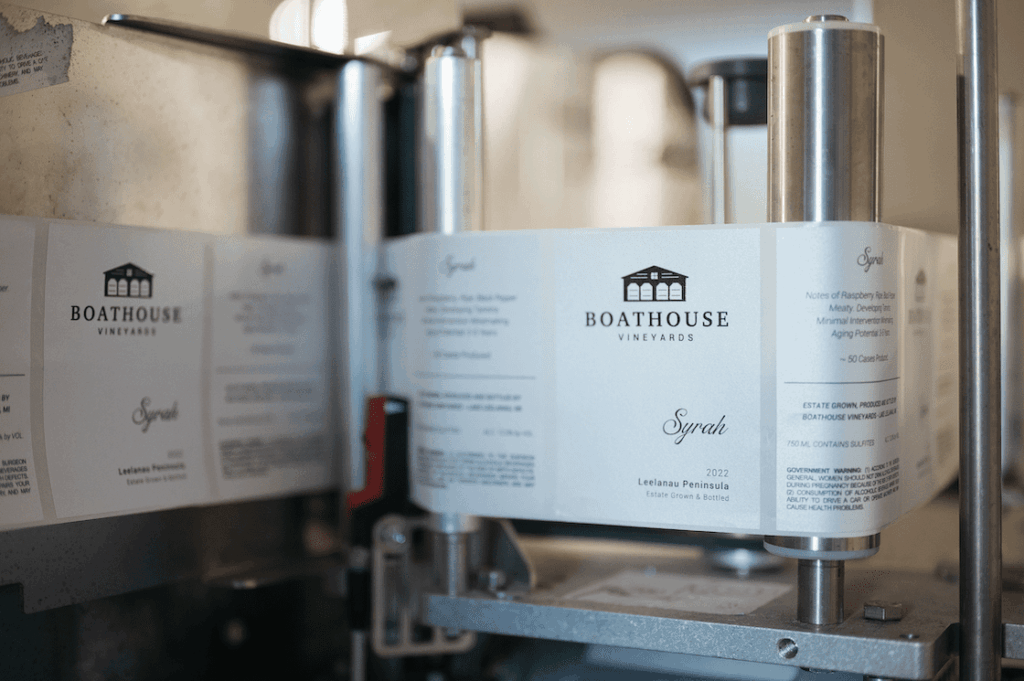
If you have joined us in the tasting room this year, you may have noticed a new wine on our menu and shelves. That new wine is Syrah. Planted in 2014, our estate Syrah covering .62 acres was previously included in our blended red wines. Beginning in 2022, the Syrah has received extra special attention both in the vineyard and the cellar to produce a 100% Syrah wine. This wine showcases purity and variety typicity – a dark, inky, wildly aromatic, cold climate representation of Syrah. This wine will turn non-believers of Michigan Red into loyal fans of what Michigan can produce. Ideal with lamb or red meats, this Syrah will evolve and change in your glass as the meal progresses. We recommend decanting an hour before you wish to enjoy it. 100% estate grown, produced and bottled 2022 Syrah. GOLD MEDAL – 2025 New York International Wine Competition

Sauternes, a village and viticulture appellation located in the southeast corner of Bordeaux is home to one of the world’s most appreciated wines. The homonym, exists not only for the town and wine from which it is derived but also the process used to produce it as well. This process relies on a beneficial (for dessert wine) fungus to grow on the grapes. When fully grown on grape berries, this fungus known as botrytis will desiccate the berries from the inside out leaving behind higher concentrations of sugar than prior to the infection. The result is an incredible development of aromatics and flavors by nearly fifty times their original concentrations! This has been affectionately referred to by the French as noble rot.
The 2022 Boathouse Dessert Muscat was made in admiration for this region and wine style by making several harvest passes through the vineyard to pick individually botrytized Muscat berries. After a harvest period of nearly two weeks in November, the highly sugar-concentrated grapes were fermented and aged in new French Oak, just like the adulated region. We are excited to share this very special wine that we will produce only when the conditions are perfect to support this unique and natural process. As always, the grapes were grown using organic practices and minimal sulfur needed using 100% estate-only fruit.
We hope you take the time to enjoy this with or without food.
For more about our winemaking click here.
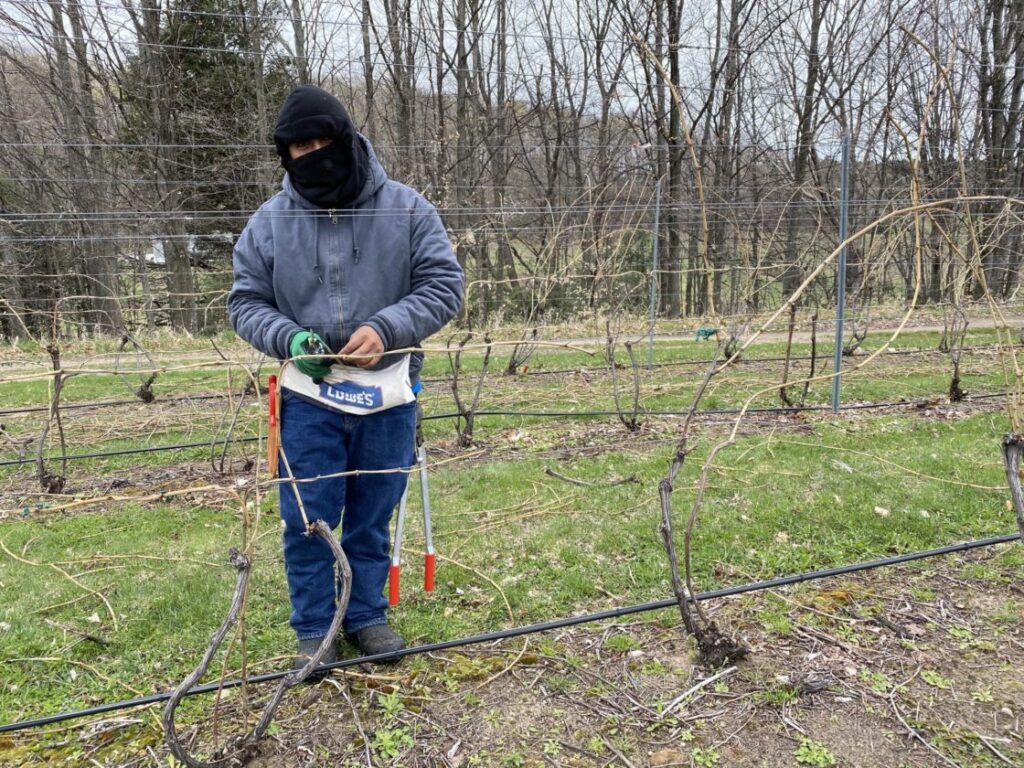
Crew size, arrival time of crew and weather dictate the time we have to finish pruning during May.
We began the final stage of pruning in April and have until the middle of May to complete tying the vines to the fruiting wire. Our deadline date is when we expect the vines to begin “bud break” or “bud burst” (when the buds have drawn enough energy to “push out” the first green leaves of a new growth cycle).
We utilize cane pruning instead of spur pruning. One of the key benefits of cane pruning is that it gives us more flexibility in managing each individual vine. We choose the best 2 canes (about as thick as a pencil or little finger) from last year and then tie them to the horizontal trellis wires for support. Ideally the canes should be growing out from a point as close as possible to the vine trunk, with the buds fairly close together. From each bud will then grow a new cane.
Earlier this spring we had a stretch of warm weather which probably moved up “bud break” by about a week. Once the buds begin “bud break” it is easy to damage the buds during pruning which will result in the potential loss of grape clusters on the vine. And this is why we are pruning in earnest to be finished before “bud break”.
Visit one of the best Leelanau Wineries and shop our recommended wines: Pinot Grigio, Unoaked Chardonnay and Cabernet Franc!

Our last worker, Alejo, arrived from Monterrey, Mexico in April. Alberto Trujillo will be overseeing this group of H2A workers (in order) – Javier, Alejo, Julio and Moises.
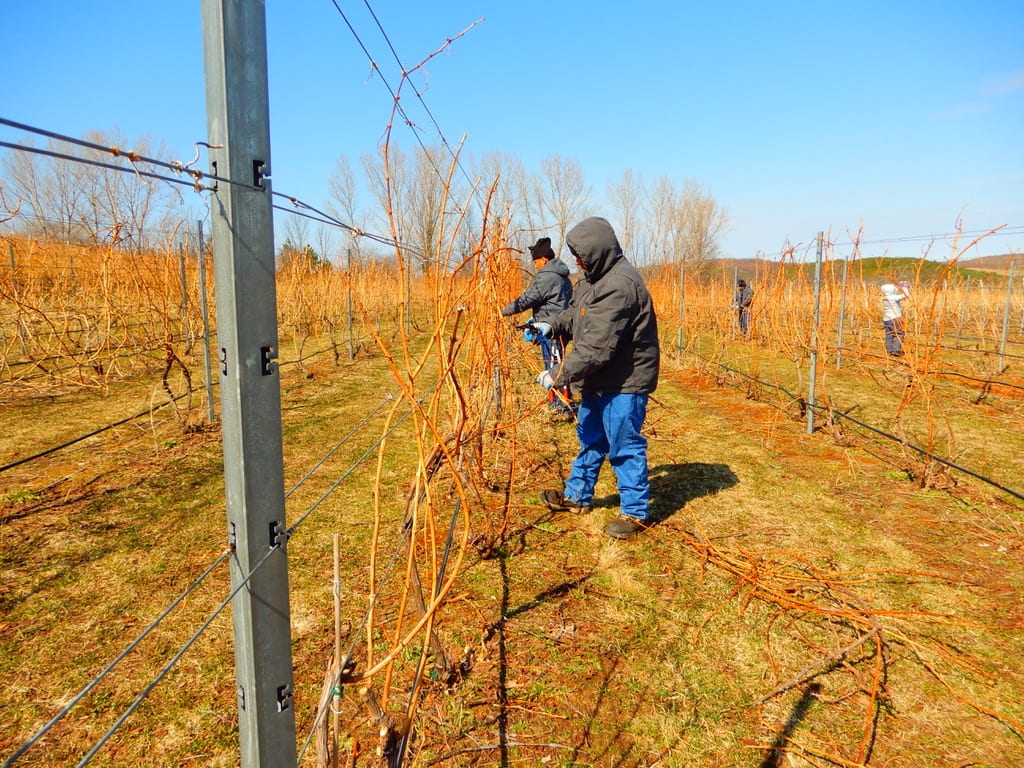
We have made significant changes this year as to how our vineyard will be cared for.
Alberto Trujillo (our Vineyard Manager) and his wife Citlali are winter pruning and we are using 4 H2A laborers to perform the pruning, tucking, leaf pulling, etc, etc, and harvesting duties necessary each year at our vineyard.
The H-2A program provides us with a stable source of workers for our vineyard. It allows U.S. employers who meet specific regulatory requirements to bring foreign nationals to the United States to fill temporary agricultural jobs. We’ve listed some of the more significant requirements below:
Provide for the cost of their Visas, transportation and food to and from the country of origin (in our case Mexico)
While in US provide for
Provide a work contract specifying exact arrival and departure dates and,
3 of our 4 H2A laborers (Julio, Javier and Moses) arrived on Sunday March 21 from Monterrey, Mexico. We are expecting our 4th worker sometime in the next few weeks.
Visit one of the best Leelanau Wineries and shop our recommended wines: Pinot Grigio, Unoaked Chardonnay and Cabernet Franc!
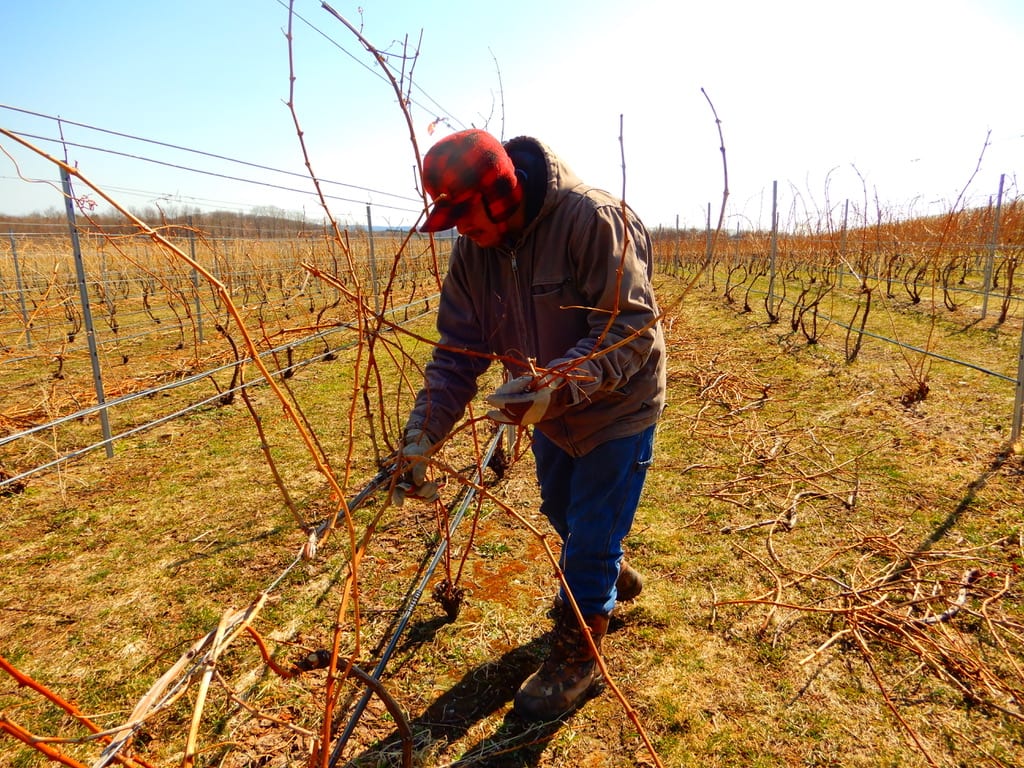
Alberto Trujillo is pruning our “spiderweb” of canes from last year to 5 – 8 canes. Once we feel we are past severe cold temperatures which could kill buds they will prune to the 2 canes for each vine that will be used to establish the grape production for the year from that vine.